
Indian restaurants are grappling with a severe LPG shortage due to the West Asia conflict, forcing them to innovate with menus and cooking methods or face potential closures, impacting the food industry and consumers across the country.

Indian eateries are adapting to the LPG crisis by cutting menus, increasing prices, and switching to alternative fuels like coal, as LPG supplies are disrupted due to global events. State authorities are cracking down on hoarding and black marketing of LPG cylinders.

'The next two to three weeks will not be decided in Washington.' 'They will be decided in Tehran, in whatever calculation Iran makes about the costs of continued resistance against the costs of appearing to have yielded.'

'I expect IT stocks to trade lower for some time. They are unlikely to make money for investors.'
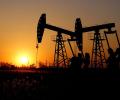
India possesses approximately 100 million barrels of commercial crude oil stocks, capable of covering 40-45 days of its requirements if flows through the Strait of Hormuz are disrupted, according to Kpler.

Analysts suggest investors remain in a wait-and-watch mode and not jump in to buy stocks across-the-board.

Saudi Arabia and the UAE are actively pushing Trump to take the war to its bitter finish and 'erase' Iran's presence in the geopolitics of the region. Simply put, the two most powerful Sunni Arab oligarchies are on the same page as Israel. Such interference increases the risk of a breakdown in dialogue between the US and Iran, points out Ambassador M K Bhadrakumar.

Salil Dhawan shares his stock market wisdom as 2017 is all set to ring out.

When everyone has footage and no one can verify it, the loudest voice wins, notes Prem Panicker who begins a daily blog on the War in the Middle East.

'It would be similar to what happened during COVID-19.' 'They are not just losing income, but being pushed into distress.'

We cannot simply have a 60-65 per cent import dependency in LPG, the bulk of which comes from just one volatile region -- West Asia, points out R Jagannathan.

The domestic stock market will continue to monitor the Israel-Iran conflict and its impact on global supplies besides prices of crude oil this week, analysts said. Global trends and trading activity of foreign investors would also drive investors' sentiment during the week.
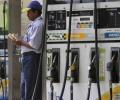
Responding to concerns raised by Leader of the Opposition Rahul Gandhi in the Lok Sabha, Petroleum Minister Hardeep Puri said it is the foremost priority of the government that the kitchens of over 33 crore families, especially the poor and the underprivileged, do not face any shortage of gas.

Leading automakers in India, including Maruti Suzuki, Tata Motors, Mahindra & Mahindra, and Hyundai, reported increased vehicle dispatches to dealers in February, driven by sustained domestic demand.
Leading automakers in India, including Maruti Suzuki, Tata Motors, Mahindra & Mahindra, and Hyundai, reported increased vehicle dispatches to dealers in February, driven by sustained domestic demand.

Terrorists seem to have foothold in our stock markets. Crucially, no modern State would have ever dealt with its own security in such a lackadaisical manner, as successive Indian governments seem to have done.

'The frenzy for gold is primarily due to the uncertainty surrounding the tariff war.'

Qatar has halted liquefied natural gas (LNG) production after its facilities came under attack amid the ongoing West Asia conflict, disrupting supplies to India and squeezing feedstock availability for key domestic sectors.
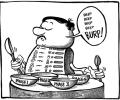
Mumbai hotels and restaurants are facing potential closures due to a critical shortage of commercial LPG cylinders, with similar disruptions reported across India. The crisis stems from revised government priorities for domestically produced natural gas, impacting the hospitality sector and potentially affecting tourism.

Over 50 per cent, or 660 stocks, from the BSE 1000 index recorded negative returns during CY25.

While investors would focus on the results and guidance for the third quarter of financial year 2025-26 (Q3FY26) in the normal course of business, the US-Israeli attack on Iran and the latter's retaliation at Gulf allies of the US has forced them to weigh the consequences of the event.

Office redevelopment is emerging as a key growth frontier for developers as India's commercial real estate market shifts towards quality, sustainability, and capital efficiency. With land parcels scarce in central business districts (CBDs) and demand for Grade A offices remaining strong, developers and investors are increasingly turning to ageing office stock in prime locations to unlock value.

Flexicap fund performance depends heavily on the fund manager's decisions.

More than Rs 2 lakh crore was wiped off from the overall investor wealth

On the macro front, market participants will closely watch the FY'15 fiscal deficit target

'The universe of PSU stocks is huge and diverse.' 'Investors should bet on specific sectors and stocks from the basket as most of them may continue to consolidate after years of outperformance.'
The market meltdown triggered by the US debt downgrade continued with full force on Tuesday too as the Indian stock markets tanked again.

Trading activity of foreign investors and global trends will be the major driving factors for the equity markets in a holiday-shortened week ahead, according to analysts. Leading stock exchanges BSE and NSE have declared a trading holiday on November 20 for assembly elections in Maharashtra. Elections to the 288-member state legislative assembly will be held on November 20, and votes will be counted on November 23.

In an eventful week ahead, stock market investors will take cues from major events like the US Federal Reserve's interest rate decision, the upcoming Union Budget and Q3 earnings, analysts said.

From the Sensex firms, Kotak Mahindra Bank, Eternal, Asian Paints, NTPC, Bharat Electronics Ltd, Adani Ports, Infosys and State Bank of India were among the major gainers. However, Titan tumbled over 6 per cent. Trent, Axis Bank, Maruti and Hindustan Unilever were also among the laggards.
Consumers and commodities are his favourite sectors at the moment.

India's 25 venture capital and private equity backed "new-age" companies, that listed between May 2020 and June 2025, reveals a sobering reality behind the hype: barely a third have delivered sustained outperformance against the market.
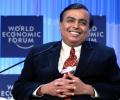
The net worth of India's richest man, Mukesh Ambani, dropped 28 per cent, or USD 300 million a day for two months to USD 48 billion as on March 31 due to the massive correction in stock markets, a report said on Monday. The chairman and managing director of the diversified Reliance Industries saw his wealth decline by USD 19 billion (app Rs 144,400 crores) in the February-March period, taking his global ranking down eight places to 17th, the Hurun Global Rich List said.

Life Insurance Corporation (LIC) , the country's largest domestic institutional investor (DII), has seen a Rs 46,000 crore erosion in the value of its equity holdings amid market downturns in July. The benchmark indices, Nifty 50 and BSE Sensex, have slipped 2.6 per cent from their June 2025-end level to 24,837 and 81,463.09 respectively.

'There is a lot of euphoria in the country after a trade agreement is signed. But it is an illusion for us. What is more important is making it real.'
We are at the cusp of something big today and retail investors need to wake up and participate early to make the most of it.

From the 30-Sensex firms, Bharat Electronics surged nearly 9 per cent post its December quarter earnings. Eternal, Bajaj Finance, Power Grid, Trent, Mahindra & Mahindra and UltraTech Cement were the other major gainers. Maruti, Sun Pharma, Infosys and Bharti Airtel were among the other laggards.

'It's better to stay away from large IT stocks until there is clarity on tariffs.'

IT stocks dropped in morning trade on Monday, with Tech Mahindra tumbling over 6 per cent, amid concerns over the steep hike in US H-1B visa fees. Shares of Tech Mahindra tumbled 6.45 per cent, LTI Mindtree slumped 5.61 per cent, Persistent Systems dropped 5.51 per cent, Hexaware Technologies tanked 5.14 per cent and HCL Tech fell by 4.24 per cent on the BSE.
The longest winning streak was the six years between 2002-2007 when the Nifty moved from around 1,000 to over 6,000.
